
World Cup 2026 Betting: Is This the Punter's Greatest Tournament Yet?
 Available in US
48 teams. 104 matches. 3 host nations. Odds, analysis, Socceroos deep dive, and AEST match times built for Australian punters who want edge, not noise.
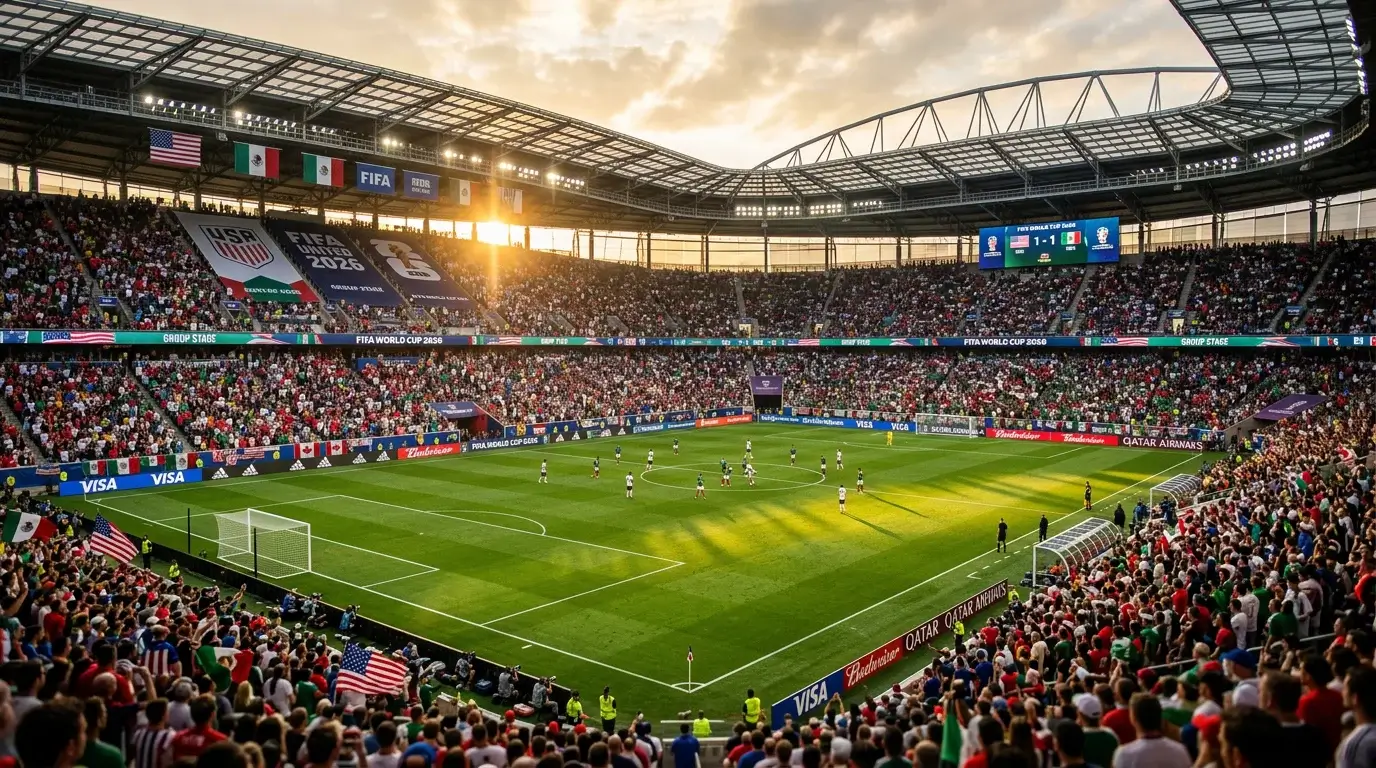
Forty-eight teams, 104 matches, three host nations, and a format that has never been tested at senior level. The 2026 FIFA World Cup lands in the United States, Mexico, and Canada this June with enough structural upheaval to make nine years of betting intuition obsolete overnight. For Australian punters, the question is blunt: does the biggest World Cup in history create the richest betting landscape ever, or does it flood the market with noise that drowns out genuine value?
I have spent the better part of a decade dissecting international tournament markets, from the bloated group stages of recent European Championships to the tight, efficient lines that defined Qatar 2022. What I see in the early World Cup 2026 betting markets is a rare collision of uncertainty and opportunity. Bookmakers are pricing 48-team dynamics they have never modelled at this scale. The implied probabilities on outright winners carry wider margins than any World Cup since 2002. And Australia's Socceroos sit in a group that looks generous on paper but hides traps that could gut an unprepared punter's bankroll in three matches.
This is the complete World Cup 2026 betting hub built for Australians who punt with purpose. Every odds figure is in decimal format, every dollar amount in AUD, and every kickoff time converted to AEST. Whether you are sizing up a multi for the Socceroos' group campaign or hunting value in the outright winner market, the analysis that follows is designed to sharpen your edge before a single ball is kicked on 11 June.
What Australian Punters Need to Know Before Kickoff
- The expanded 48-team format and Round of 32 knockout phase create new betting market structures that reward punters who adapt their strategy rather than recycle approaches from previous World Cups.
- Australia's Socceroos face a Group D draw that is genuinely favourable by historical standards, with realistic paths to the knockout rounds at odds that still carry value.
- Outright winner markets are wider than usual because bookmakers are pricing unprecedented variables, which means early positions on undervalued contenders can lock in significant edge.
- New Australian regulations from 2024 to 2026 have changed how you fund bets and where you see advertising, but online World Cup wagering through licensed operators remains fully legal.
- Multi-bets will dominate social media during the tournament, yet the mathematical case against them is stronger than ever in a 48-team field where variance compounds across every added leg.
Does a 48-Team World Cup Change How You Should Bet?
In 2017, when FIFA confirmed the expansion to 48 teams, the first reaction from most betting analysts I spoke with was a shrug. More teams, same power structure, same favourites. That take has not aged well. The structural changes run deeper than a bigger bracket, and they hit punters in ways that are not immediately obvious.

Start with the group stage. Twelve groups of four sounds familiar, but the qualification pathway is not. The top two from each group advance, as expected, plus the eight best third-placed teams. That third-place lifeline is the single most important variable in World Cup 2026 betting because it changes how teams approach final group matches. In a traditional World Cup, a team sitting on three points from two games often plays conservatively to protect what they have. When third place can still qualify, that calculus shifts. A team on three points might push for a win to guarantee progression rather than gamble on results elsewhere. For overs/unders markets, this is significant: expect more open final-round group games than any previous World Cup.
Format at a glance: 12 groups of 4 teams. Top 2 per group qualify automatically (24 teams). The 8 best third-placed teams also advance. Round of 32 replaces the traditional Round of 16.
The outright winner market is where the expansion bites hardest. In a 32-team World Cup, the favourite typically carries implied probability around 16 to 20 percent. In early 2026 markets, Argentina's implied probability sits closer to 13 percent. That is not because Argentina are weaker; it is because seven extra knockout matches create seven extra opportunities for variance to strike. The favourite has to win one additional game to lift the trophy. For punters, this means outright winner bets carry worse expected value at shorter odds than they did in previous cycles. The sweet spot shifts toward teams priced between 8.00 and 15.00 in decimal odds, where the implied probability better reflects the real chance of navigating an extra round.
The expansion effect on outright odds
A team with a genuine 15% chance of winning the World Cup might be priced at 7.50 in a 32-team tournament but pushed out to 9.00 or wider in a 48-team field. That gap is where value lives for punters who understand what the format change actually does to probabilities.
Then there is the "more teams, more upsets" argument. It sounds intuitive, and social media will amplify every Saudi Arabia vs Argentina-style shock as proof that the expanded World Cup is chaos. But the data from expanded youth tournaments tells a different story. When the FIFA U-20 World Cup moved to 24 teams, upset frequency per match actually dropped because the weaker sides added to the field lost more predictably than the competitive middle tier. The upsets that did occur were concentrated in the group stage, particularly in final-round matches where motivation differentials were highest. I expect 2026 to follow the same pattern: more blowouts in the first two group rounds, more drama in the third, and a knockout phase that reverts to form with favourites asserting themselves against overmatched third-place qualifiers.
For the Australian punter, the practical takeaway is this: do not treat World Cup 2026 betting the same way you treated Qatar 2022. The multi-bet strategies that might have worked across 64 matches become riskier across 104. The outright market rewards patience and value hunting over backing the obvious favourite. And the group stage, with its third-place safety net, opens up hedging and scenario-based strategies that simply did not exist before. The format has changed. Your approach should change with it.
The format reshapes the whole tournament, but for Australian punters, one group matters more than any other.
Can the Socceroos Repeat Their 2022 Miracle?
Six points in Qatar. Second in the group behind France. A knockout-round appearance for the first time since 2006. When the Socceroos walked off the pitch after their Round of 16 loss to Argentina in December 2022, Australian football had its best World Cup result in 16 years, and the phrase "golden generation" entered the national conversation for the second time. Now the question that every punter in the country is asking: was that a foundation, or was it a peak?
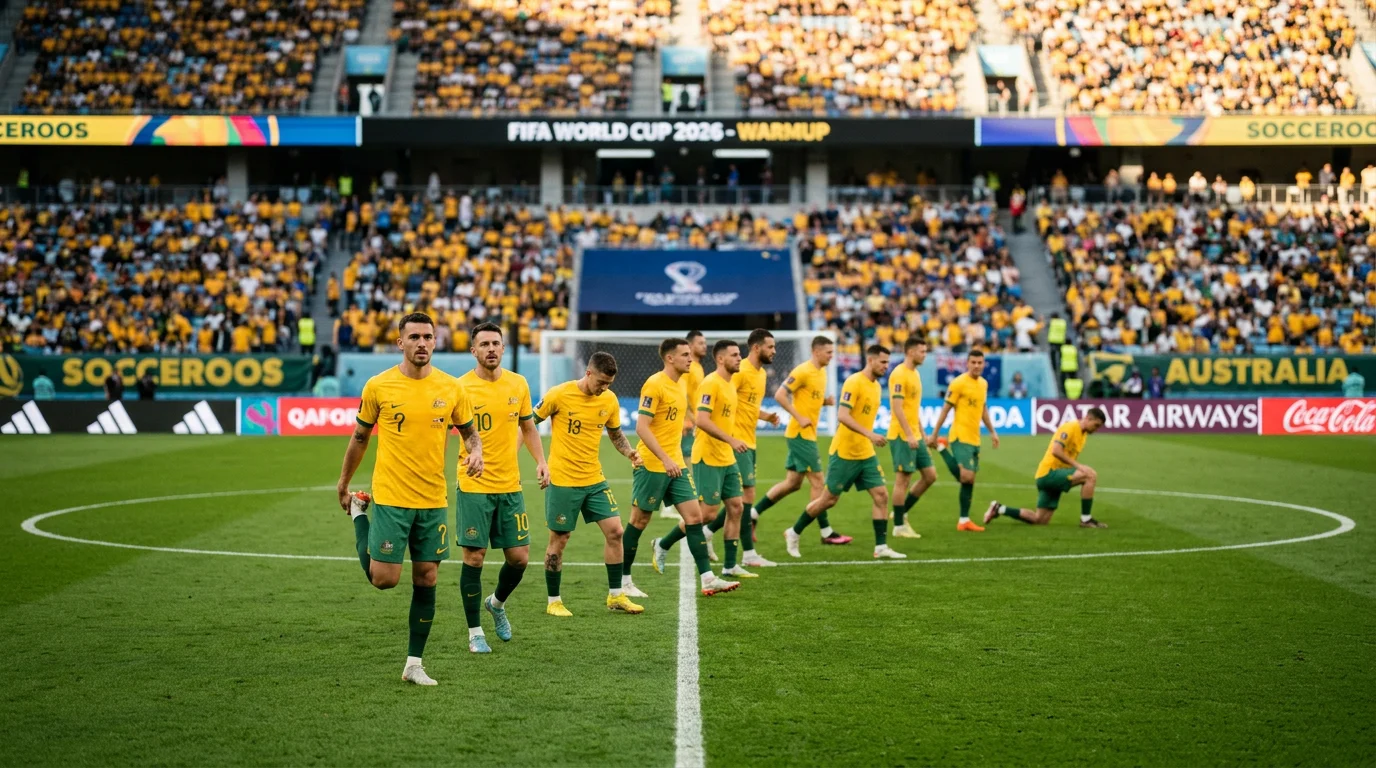
The draw handed Australia Group D alongside the United States, Turkey, and Paraguay. On paper, this is one of the more navigable groups in the tournament. There are no European heavyweights, no South American giants, and the tournament's co-hosts are the clear group favourites rather than a threat that might force the Socceroos into third place. I rate it the fourth-most favourable group for the third-seeded team across all twelve groups. That is not a guarantee of progression, but it is a platform.
Group D Breakdown
| Team | FIFA Pot | Route to Qualification | Key Strength |
|---|---|---|---|
| USA | Pot 1 (Hosts) | Automatic (host nation) | Home advantage, depth of European-based talent |
| Australia | Pot 3 | AFC qualification (direct) | Tournament experience (2022 legacy), defensive organisation |
| Turkey | Pot 4 | UEFA playoff (beat Kosovo) | Individual talent, attacking firepower |
| Paraguay | Pot 2 | CONMEBOL qualification | South American physicality, set-piece threat |
The United States are the team to beat. Host-nation advantage at World Cups is not a myth; it is a documented statistical edge. Since 1990, host nations have reached the knockout rounds every single time, and three of the last eight hosts reached at least the semi-finals. The Americans have a squad stocked with players at top European clubs, home crowd energy across the Pacific Northwest venues where Group D is based, and the kind of institutional preparation that comes with seven years of lead time. I expect them to top the group comfortably.
That leaves one automatic qualification spot and a potential third-place lifeline. Turkey qualified through the UEFA playoffs after beating Kosovo, arriving with undeniable attacking talent but a reputation for inconsistency that has defined their recent tournament history. They have the highest ceiling of any team in the group outside the USA, but also the lowest floor. Paraguay scraped through CONMEBOL qualifying in a cycle where South American football was unusually congested, and while they bring the typical CONMEBOL resilience and physicality, they lack the star power to dominate at this level.
Socceroos' Three Group Matches
The opening match against Turkey is the fixture that defines the campaign. A win there, and the Socceroos can afford to lose to the USA and still qualify with a result against Paraguay. A loss, and suddenly every remaining match becomes must-win territory with no margin for error. I would argue the Turkey match is the single most valuable World Cup betting event for Australian punters this tournament.
If Australia finish second in Group D, the Round of 32 draw pits them against the second-placed team from Group G, which features Belgium, Iran, Egypt, and New Zealand. That is a beatable draw. Belgium's golden generation has aged, Egypt are inconsistent, and New Zealand would be a dream opponent for any Round of 32 match. The Socceroos' path to at least a quarter-final appearance is not fantasy; it is a plausible scenario that the odds have not fully priced in.
The Socceroos' Group D draw is the most favourable Australia has received at a World Cup since 2006. The opening match against Turkey on 14 June is the swing fixture that determines whether this campaign mirrors the highs of Qatar 2022 or the disappointments of Brazil 2014.
Australia's group odds are one piece of the puzzle. The outright winner market is where the real debate begins.
Kickoff Edge proprietary model
The Lifeline Ladder
Eight of the twelve third-placed teams survive. Set a team's final group line and the model runs 20,000 tournaments to work out whether that line clears the cut — and what the "to qualify" market should really be paying.
1 · Set the line
First tiebreak is goal difference, then goals scored. A 0–0 grind and a 3–3 shootout are not the same result on this ladder.
This sets how many points the other eleven third-placed teams are expected to bank. It is the single biggest lever on the cut line.
2 · Read the cut
chance of finishing in the top eight of the twelve third-placed teams
Set a line to run the model.
- Fair price on the lifeline
- —
- Typical finishing rung
- —
- Points that clear the cut
- —
Projected third-place ladderavg. points at each rung
3 · Price the "to qualify" market
A team qualifies either by finishing top two or by finishing third and surviving the ladder. Feed in your own read on the first two routes and the model prices the whole market.
—
How the ladder is built
Each run draws a points total for the other eleven third-placed teams from the profile you select, gives each one a goal difference and a goals-scored figure consistent with that total, then ranks all twelve on FIFA's order: points, goal difference, goals scored. Twenty thousand runs, re-rolled every time you move a control.
| Points | Balanced | Minnow-heavy | Attritional |
|---|---|---|---|
| 6 or more | 9% | 12% | 5% |
| 4 | 34% | 38% | 25% |
| 3 | 30% | 28% | 32% |
| 2 | 13% | 10% | 19% |
| 1 | 9% | 8% | 13% |
| 0 | 5% | 4% | 6% |
The balanced column is anchored on the last two European Championships, the only recent tournaments that run the same two-thirds survival rate for third-placed teams, and adjusted upward for the weaker fourth seeds a 48-team field brings in. Four points has cleared the cut in every recent tournament run at this survival rate. Three points is the live number, and it is usually goal difference that separates the teams sitting on it.
A model, not a prediction. Odds move, squads change, and no simulation knows what happens in the 88th minute. 18+. Gamble responsibly — Gambling Help 1800 858 858.
Where's the Value: Outright Winner Odds Breakdown
Every four years, Australian bookmakers open their outright World Cup winner markets, and every four years, the same mistake repeats: punters pile onto the favourites because they recognise the names, ignore the implied probabilities, and hand the bookmaker a built-in edge before a ball is kicked. In 2022, Argentina's pre-tournament price of around 6.50 looked generous in hindsight, but the market correctly identified them as the most likely winner. The question for 2026 is whether the current prices reflect genuine probability or whether the 48-team expansion has created mispricings that sharp punters can exploit.
I have compiled the approximate outright winner odds available across major Australian-licensed bookmakers as of early 2026. These are indicative and will shift as the tournament approaches, but the relative positions reveal where the market sees value and where it does not.
| Team | Approx. Odds | Implied Prob. | Assessment |
|---|---|---|---|
| Argentina | 7.00 | 14.3% | Defending champions, Copa America winners. Fair price, not generous. |
| France | 7.50 | 13.3% | Two consecutive finals. Deepest squad in the tournament. Slight value. |
| England | 8.00 | 12.5% | Perpetual underperformers in knockout rounds. Overpriced relative to tournament record. |
| Spain | 9.00 | 11.1% | Young squad, tactical evolution under new cycle. Interesting at this price. |
| Brazil | 9.50 | 10.5% | Rebuild phase. Talent is undeniable, but cohesion is a question mark. |
| Germany | 11.00 | 9.1% | Favourable Group E draw. Post-2024 Euros rebuild showing results. |
| Portugal | 13.00 | 7.7% | Post-Ronaldo transition ongoing. Group K is tricky (Colombia). |
| Netherlands | 15.00 | 6.7% | Strong squad, tough Group F (Japan). Value territory begins here. |
| USA | 17.00 | 5.9% | Host-nation premium. Price reflects hype as much as ability. |
| Belgium | 21.00 | 4.8% | Aging core, but tournament experience is deep. Watch for drift. |
The debate that matters is not "who will win" but "who is mispriced." Argentina at 7.00 is a fair reflection of their standing as defending champions with the most tournament-hardened squad, but the value has been squeezed out by public money. France at 7.50 offers marginally better value because their squad depth is arguably superior and their route through the bracket could be more favourable depending on group results. England at 8.00 is the market's biggest trap for Australian punters who watch the Premier League every weekend and overweight domestic familiarity. England have not won a major tournament in over 60 years, and their knockout-round record since reaching the 2018 semi-finals includes a penalty shootout loss to Italy and a final loss to Spain at Euro 2024. The price implies a semi-final appearance as a baseline outcome, which is generous given the evidence.
Where I see genuine value
The 9.00 to 15.00 range is where the best risk-adjusted returns sit for this tournament. Spain's generational talent, Germany's post-rebuild momentum, and the Netherlands' squad quality are all priced with enough margin to absorb the extra variance of a 48-team format. These are not long shots; they are contenders the market has underweighted because public money gravitates to the top three.
Further down the list, Japan at around 34.00 and Morocco at roughly 41.00 represent the dark-horse tier that delivered the most memorable moments in Qatar 2022. Both teams have strengthened since, both have squads stocked with European-league regulars, and both landed in groups where they could feasibly top their pool. I am not suggesting a significant stake at those prices, but a small each-way position (where offered) or a "to reach the semi-finals" bet at shorter odds carries more expected value than an outright winner punt on England.
The Socceroos' outright odds sit in the 100.00-plus range, which is fair for a team whose ceiling is a quarter-final run. The smarter play for Australians is the "to qualify from group" market, where the Socceroos' price reflects an underestimation of their Group D draw. If you are going to punt on Australia, make it a targeted bet on a specific, achievable outcome rather than an outright fantasy.
Outright odds are the headline market, but the group stage is where most punters will live day to day. The twelve groups offer wildly different levels of predictability.
Which Groups Are Traps and Which Are Gifts?
I remember sitting in a Sydney pub during the 2014 World Cup draw, watching the screen with a dozen mates who all declared their group "the toughest in the tournament." Every Australian felt Group B with Spain, Netherlands, and Chile was a death sentence. They were right about the difficulty, but wrong about the entertainment: that group produced some of the most extraordinary football of the entire World Cup. The point is that group assessments are part analysis and part emotion, and the trick for punters is separating the two.
Twelve groups. Forty-eight teams. The dynamic is fundamentally different from the eight-group, 32-team structure you are used to. With third-placed teams able to qualify, even groups that look lopsided can produce unexpected results in the final round when motivation differentials kick in. I have assessed all twelve groups through a betting lens, categorising them by how predictable the qualification picture is for punters.
Groups Where the Outcome Looks Settled
Group A (Mexico, South Korea, South Africa, Czechia) favours Mexico and South Korea advancing with minimal drama. Mexico have home advantage for two of their three matches and tournament-hosting pedigree. Group E (Germany, Ecuador, Côte d'Ivoire, Curaçao) has a clear favourite in Germany and a second-place battle that tilts toward Ecuador. Group J (Argentina, Austria, Algeria, Jordan) is Argentina's to lose; the debate is whether Austria or Algeria claim second, but Argentina topping the group carries implied probability above 70% across most books.
Groups Where the Drama Lives
Group F (Netherlands, Japan, Tunisia, Sweden) is my pick for the most compelling group in the tournament. The Netherlands and Japan are both genuine Round of 16 contenders, but only two can qualify automatically. Tunisia upset France in the group stage in 2022 and bring the organisational discipline to steal points from either frontrunner. Sweden, back through the UEFA playoffs after beating Poland, have the tournament pedigree to make this a four-way fight. For punters, Group F's "group winner" market is the highest-variance, highest-reward play in the entire group stage.
Group K (Portugal, Colombia, Uzbekistan, DR Congo) is the other standout. Portugal and Colombia are separated by razor-thin margins in the betting, and Colombia's form heading into 2026 has been outstanding. Uzbekistan are debutants in all but name, and DR Congo return to the World Cup for the first time in 52 years. The top two are clear, but which one finishes first determines their knockout-round path, making the "group winner" bet the sharpest angle here.
Group L (England, Croatia, Panama, Ghana) looks comfortable for England on paper, but Croatia have a documented history of raising their level at World Cups, and their 2018 final and 2022 semi-final runs should remind punters not to dismiss them as a fading force. An England-Croatia group-stage battle is one of the marquee matchups of the opening round.
Australia's Group in Context
Group D sits in the middle: not a gift, not a trap. The USA are heavy favourites to win the group, which makes the "to qualify" market for the other three teams the active betting space. Turkey's volatility makes them the hardest team in the group to price. Paraguay are the weakest side on paper but bring the kind of South American grit that produces low-scoring, tight matches where one set piece can change everything. Australia's path to second place requires beating at least one of Turkey or Paraguay and managing the USA match without a capitulation that damages goal difference.
Groups F and K offer the most compelling group-winner markets for punters. Group D, the Socceroos' group, rewards "to qualify" bets over outright group-winner positions because the USA's top-spot probability is too high to fight.
5 World Cup Betting Myths Australian Punters Still Believe
A mate of mine once placed a nine-leg multi on first goalscorers across a single World Cup matchday and told me, with complete sincerity, that he had "done his research." He lost. Every punter carries a set of assumptions about World Cup betting that feel like wisdom but function as wealth transfer to bookmakers. I have heard every variation over nine years in this industry, and the same five myths circulate every cycle.
Myth 1: "More Teams Means More Upsets, So Back the Underdogs"
The logic sounds compelling. Forty-eight teams instead of 32 means more Curaçaos, more Haitis, more Jordans, and therefore more upsets. The reality is that expanded tournaments dilute upset frequency, not amplify it. When FIFA expanded the U-20 World Cup to 24 teams, the percentage of matches won by lower-ranked sides actually decreased because the additional teams were weaker, not stronger. The upsets that generate headlines (Saudi Arabia stunning Argentina, Japan beating Germany) happen between competitive mid-tier sides and favourites, not between minnows and giants. Backing every underdog in a 48-team World Cup is a recipe for slow-bleeding your bankroll across 104 matches.
Myth 2: "You Can't Bet In-Play in Australia, So Live Markets Are Dead"
This one is half true, which makes it more dangerous than a full lie. The Interactive Gambling Act does prohibit online in-play betting. You cannot open your Sportsbet app mid-match and place a bet on the next goalscorer through the interface. But you can place in-play bets by telephone through any licensed Australian bookmaker. It is clunky, it is slower, and it requires you to actually speak to a human being, but the market exists and is legal. For high-conviction, high-value in-play situations, such as backing the draw at halftime when a favourite is dominating possession but trailing 1-0, the phone option is worth knowing about.
Myth 3: "Multis Are the Best Way to Make Money at the World Cup"
Australians love a multi. The phrase "having a punt" in this country usually means assembling a four-leg accumulator on the day's matches and checking the phone intermittently for dopamine hits. The maths, however, is merciless. Every leg you add to a multi compounds the bookmaker's margin. A four-leg multi on markets where the bookmaker holds a 5% margin per leg carries a cumulative house edge of roughly 18.5%. That means for every A$100 you stake on four-leg multis over time, you can expect to lose around A$18.50. The entertainment value is real; the investment case is not.
The margin maths: If each leg of a multi has a 5% bookmaker margin, a 4-leg multi carries approximately 1.05 to the power of 4 = 1.2155, or a 21.55% overround. The effective house edge compounds with every leg added, which is why bookmakers actively promote multi-bet features in their apps.
Myth 4: "The Host Nation Always Overperforms, So Back the USA"
Host-nation advantage is real but overstated in betting terms. Since 1990, hosts have reached the knockout rounds every time, and South Korea (2002) and Russia (2018) produced the most dramatic overperformances. But the USA in 2026 are already priced as a top-ten contender, meaning the host premium is baked into the odds. At 17.00 for the outright, you are not getting host-nation advantage for free; you are paying for it. The sharper angle is backing the USA in specific markets where the home crowd impact is most pronounced, such as first-half result in their group matches, rather than an outright position where the price has been squeezed by hype.
Myth 5: "Early World Cup Odds Are Always Generous"
This myth has a kernel of truth buried under a mountain of nuance. Early odds can offer value on specific teams before the market has fully priced in squad announcements, injury updates, and pre-tournament friendlies. But early odds also carry wider margins because bookmakers are hedging their own uncertainty. The sweet spot for value is not "as early as possible" but rather the period between final squad announcements and the tournament's opening match, when information asymmetry is at its highest and bookmakers are adjusting lines in real time based on sharp money. For the 2026 World Cup, that window is roughly late May to 10 June.
Every myth on this list survives because it contains enough truth to feel credible. The punter's edge comes from recognising where the truth ends and the bookmaker's advantage begins.
How to Bet on the World Cup in Australia (2026 Rules)
Two years ago, if you told me the Australian gambling landscape would undergo its most significant regulatory overhaul in two decades right before the biggest World Cup in history, I would have assumed the timing was deliberate. Whether it was or not, the result is a punting environment in 2026 that looks meaningfully different from what Australian bettors experienced during the Qatar 2022 cycle. The fundamentals have not changed, but several important details have.
Online sports betting in Australia remains legal through operators licensed under state and territory frameworks, regulated at the federal level by the Australian Communications and Media Authority (ACMA) under the Interactive Gambling Act 2001. Every major bookmaker operating in Australia, from Sportsbet and Ladbrokes to TAB and PointsBet, holds a valid licence and is subject to consumer protection requirements. That legal foundation is unchanged.
What has changed sits in three areas. First, as of June 2024, credit cards and cryptocurrency can no longer be used to fund online betting accounts. If your previous World Cup punting strategy involved topping up your Sportsbet account with a Visa credit card, that option is gone. Debit cards, bank transfers, and approved digital wallets remain available. The intent is harm minimisation, and it is worth acknowledging: if you are reaching for credit to fund a World Cup bet, that is a signal worth listening to.
Second, BetStop, the National Self-Exclusion Register, launched in 2023. Any Australian can register with BetStop to be excluded from all licensed online wagering services for a minimum of three months. All licensed bookmakers are legally required to check the register and refuse bets from registered individuals. If you need it, use it. There is no stigma in responsible gambling.
Third, and most recently, the advertising reforms passed on 2 April 2026 represent the most aggressive crackdown on gambling advertising in Australian history. While the full ban on live-sport broadcast advertising during the 6:00 to 20:30 window does not take effect until 1 January 2027, the legislative signal is unmistakable: the era of wall-to-wall betting ads during football broadcasts is ending. During the 2026 World Cup itself, existing rules limit broadcast advertising, and online advertising is restricted to logged-in users aged 18 and over with opt-out options. Stadium advertising, player-uniform branding, and celebrity or athlete endorsements for betting products are now prohibited.
Key 2026 legal changes for punters: Credit card and crypto funding banned since June 2024. BetStop self-exclusion register active since 2023. Gambling advertising reform passed April 2026, with the harshest restrictions phased in from January 2027. Online in-play betting remains prohibited (telephone in-play is legal through licensed bookmakers).
For the average Australian punter placing World Cup bets, the practical impact is modest. You can still open an account with a licensed operator, deposit via debit card or bank transfer, and place pre-match bets on any World Cup market offered. The in-play restriction is the most frustrating for seasoned bettors, but the telephone workaround exists for those willing to use it. The regulatory direction is toward less impulse betting and more deliberate wagering, which, from an analytical perspective, aligns with how I believe punters should approach a tournament of this scale anyway.
World Cup betting in Australia is legal, regulated, and accessible through licensed operators. The 2024-2026 reforms changed how you fund bets and how bookmakers advertise, but the core activity of placing a pre-match wager on a World Cup match remains straightforward.
Match Schedule: AEST Times That Actually Work
Here is something that rarely gets said about World Cup hosting decisions: the 2026 tournament's North American time zones are better for Australian viewers than any World Cup since Japan/Korea 2002. When Qatar 2022 kicked off at local evening times, Australian viewers were watching at midnight and beyond. The 2018 Russia World Cup started most matches between 10pm and 3am AEST. This time, the geography works in our favour.
The United States, Mexico, and Canada span four major time zones (Eastern, Central, Mountain, Pacific), with most matches scheduled for local afternoon and evening slots. The Pacific time zone venues, including the three stadiums where Australia play their Group D matches, produce AEST times that land squarely in the Australian morning and early afternoon. That means you can watch the Socceroos live on SBS without setting a 3am alarm.
Socceroos Match Times
The USA match is the earliest start at approximately 7:00am AEST, which is still a reasonable time for a breakfast-with-football session. The Turkey and Paraguay matches land in the afternoon, perfect for a long lunch or an early-finish Friday at the office. Compare that to Qatar 2022, where Australia's group matches kicked off at 11pm, 3am, and midnight AEST.
Key Neutral Matches for Punters
| Match | Date | Approx. AEST | Venue |
|---|---|---|---|
| Mexico vs South Africa (Opening) | 11 Jun | ~09:00 | Estadio Azteca, Mexico City |
| Netherlands vs Japan | Group F | TBC | TBC |
| England vs Croatia | Group L | TBC | TBC |
| Argentina vs Austria | Group J | TBC | TBC |
| Final | 19 Jul | ~09:00 | MetLife Stadium, New York/New Jersey |
SBS holds the broadcast rights to all 104 matches of the 2026 World Cup, available free-to-air and via SBS On Demand streaming. That is the same arrangement as every World Cup since SBS became Australia's football broadcaster, and it means every group-stage match, every knockout tie, and the final itself is accessible without a paid subscription. For punters, free access to every match means you can watch the form of every team you are betting on rather than relying on highlights and second-hand analysis.
Time zone advantage: Group D's three venues are all on the Pacific coast of North America (Vancouver, Seattle, San Francisco). Pacific Time is UTC-7, which translates to AEST minus 17 hours during Australian winter. A 7pm PT kickoff = 12pm AEST the following day. That's lunchtime football, not insomnia football.
The schedule is set, the times are friendly, and the legal framework is clear. So the only question left is the one every punter asks at the end of a briefing: is it actually worth the punt?
Is World Cup 2026 Worth Your Punt?
The 2026 World Cup is not just worth your punt; it is the most structurally interesting betting tournament since the Champions League expanded its group stage. The 48-team format has blown open the outright market, created new group-stage dynamics that reward analytical punters over casual accumulators, and handed Australia a draw that makes the Socceroos' "to qualify" market one of the best-value domestic bets of the year. The betting landscape has never been this wide. The schedule has never been this friendly for Australian time zones. The regulatory environment is stricter but clearer than ever. And the tournament itself, across 104 matches and 39 days, will produce more actionable betting opportunities than any single sporting event you will encounter in 2026.
Place your bets deliberately, back your analysis over your emotions, and treat every multi with the scepticism it deserves. This is not a tournament for reckless punting. It is a tournament that rewards the punter who has done the work. The expanded format, the favourable AEST times, and the depth of available markets mean that World Cup 2026 betting offers Australian punters something rare: a genuine edge for those willing to look past the noise and into the numbers.
Frequently Asked Questions
How many teams are in the 2026 World Cup, and how does the new format work?
The 2026 World Cup features 48 teams divided into 12 groups of 4. The top 2 teams from each group qualify automatically for the Round of 32, along with the 8 best third-placed teams. This means 32 of the 48 teams advance to the knockout rounds, which begin with a Round of 32 rather than the traditional Round of 16. The tournament runs from 11 June to 19 July 2026 across 16 stadiums in the United States, Mexico, and Canada, with a total of 104 matches.
Is it legal to bet on the World Cup online in Australia?
Yes. Online sports betting through licensed Australian operators is fully legal under the Interactive Gambling Act 2001. You can place pre-match bets on all World Cup markets through licensed bookmakers. Online in-play betting is prohibited, but in-play bets can be placed by telephone through licensed operators. Since June 2024, credit cards and cryptocurrency cannot be used to fund betting accounts; debit cards and bank transfers remain available.
What group are the Socceroos in, and when do they play?
Australia are in Group D alongside the United States (hosts), Turkey, and Paraguay. The Socceroos play Turkey on 14 June at BC Place in Vancouver (approximately 14:00 AEST), the USA on 20 June at Lumen Field in Seattle (approximately 07:00 AEST), and Paraguay on 25 June at Levi's Stadium in San Francisco (approximately 12:00 AEST). All three venues are on the Pacific coast, producing AEST-friendly kickoff times.
What odds format do Australian bookmakers use for World Cup betting?
Australian bookmakers use decimal odds as standard. Decimal odds represent the total return per dollar staked, including the original stake. For example, odds of 2.50 mean a A$10 bet returns A$25 (A$15 profit plus your A$10 stake). This differs from fractional odds used in the UK and moneyline odds used in the US. All odds figures on this site are presented in decimal format.
Who are the favourites to win the 2026 World Cup?
As of early 2026, Argentina (defending champions) lead the outright market at approximately 7.00, followed by France at around 7.50 and England near 8.00. Spain, Brazil, and Germany occupy the next tier between 9.00 and 11.00. Host nation USA are priced around 17.00, reflecting both their squad quality and home-ground advantage. These prices will fluctuate as the tournament approaches, particularly after final squad announcements in late May.
Where can I watch World Cup 2026 matches in Australia?
SBS holds the free-to-air broadcast rights to all 104 matches of the 2026 World Cup. Matches are available on SBS television and through the SBS On Demand streaming platform at no cost. The North American time zones produce AEST kickoff times that are significantly more viewer-friendly than recent World Cups: most matches will fall between 05:00 and 15:00 AEST, with evening matches in the US translating to late morning or midday in eastern Australia.
