
Do Turkey and Paraguay Have Any Chance Against Australia in Group D?
 Available in US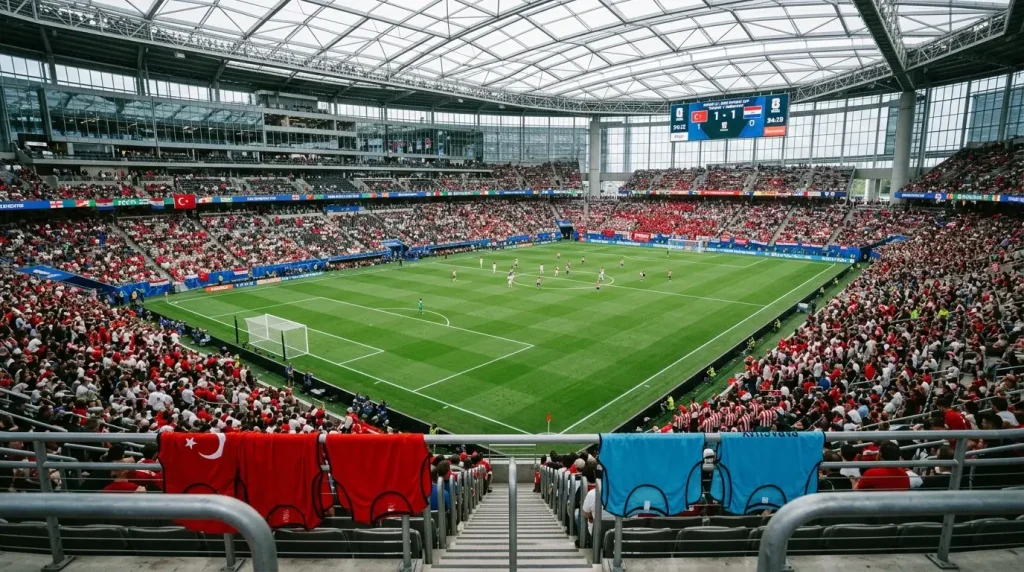
Table of Contents
Australia’s chances in Group D depend on one brutally simple equation: beat at least one of Türkiye or Paraguay, and the Socceroos will almost certainly qualify. Lose to both, and the tournament is over before the third match kicks off. That equation makes these two sides the most important opponents in Australian football this decade — more consequential than Japan in qualifying, more significant than any A-League derby, more decisive than any friendly against a European giant. So who are they, what do they bring, and which one should the Socceroos fear more?
I have spent the last eight weeks studying both squads in detail — watching their qualifying matches, analysing their tactical setups, and comparing their profiles against Australia’s strengths and vulnerabilities. My assessment is that Türkiye are the more talented but less reliable side, while Paraguay are the more limited but more physically imposing opponent. Both can be beaten. Neither should be underestimated.
Türkiye: Volatile Talent or Genuine Threat?
Last summer, I watched Türkiye beat Austria at Euro 2024 in a performance that combined tactical discipline with moments of individual brilliance so sharp they took your breath away. Three weeks later, I watched the same Türkiye side collapse against the Netherlands in a quarter-final where they conceded three goals from defensive errors that would embarrass a state league side. That swing — from elite to abysmal within the same tournament — is the defining characteristic of Turkish football, and it has been for as long as I have covered the sport.
Türkiye qualified for the 2026 World Cup through the European playoffs, beating Kosovo across two legs in a tie that required extra time. The playoff route tells you that Türkiye were not good enough to qualify automatically from a European group that included Wales, Iceland, and Montenegro — sides that, on paper, a squad of Türkiye’s individual quality should have dispatched without drama. Instead, they drew too many matches, lost concentration at critical moments, and arrived at the playoff stage needing to win two elimination ties to earn their place in North America.
The talent, though, is undeniable. Arda Güler has established himself at Real Madrid as one of the most creative young players in European football. His left foot can produce passes and shots that change the trajectory of a match in a single moment, and at 21, he enters the World Cup with the fearlessness of youth and the technical quality of a veteran. Hakan Çalhanoğlu at Inter Milan provides the midfield control and set-piece delivery that Türkiye depend upon — his free kicks and penalties are consistently elite, and his positional intelligence allows Türkiye to build attacks through central areas with patience and purpose.
Kenan Yıldız at Juventus adds another dimension from the wide areas. At 20, he has already demonstrated the ability to beat defenders one-on-one, deliver crosses into dangerous areas, and score spectacular goals in high-pressure matches. The forward line is further strengthened by strikers who bring physicality and movement, giving Türkiye multiple attacking options that can be deployed depending on the opponent’s defensive structure.
The problem is defensive. Türkiye conceded 12 goals in their ten European qualifying matches — a record that places them among the leakier sides in the tournament. The centre-back partnerships have rotated throughout the campaign without settling on a first-choice pairing, and the full-back positions are vulnerable to pace and direct running. Australia’s wide players, if given space to run at the Turkish defence, could exploit exactly the kind of one-on-one situations where Türkiye’s defenders struggle most.
The emotional volatility adds another layer. Turkish football culture is intense — the crowds are ferocious, the media is unforgiving, and the players carry the weight of a nation that swings between euphoria and despair with every result. At home, that intensity is an asset. Away from home, or at a neutral venue like BC Place in Vancouver, the emotional swings can work against the players. A missed chance in the 20th minute can become a collective crisis by the 40th. A conceded goal can trigger panic rather than resolve. For the Socceroos, managing the emotional arc of the match — staying calm when Türkiye are flying, pressing when Türkiye are wobbling — could be the key to victory.
Paraguay: CONMEBOL Grit or Out of Their Depth?
Paraguay do not arrive at the 2026 World Cup with headlines or hype. They qualified sixth in CONMEBOL — the last automatic spot — with a record of six wins, four draws, and eight losses from eighteen matches. A goal difference of minus three over the campaign reveals a side that wins ugly, loses narrowly, and survives through sheer stubbornness rather than any discernible tactical sophistication. In any other confederation, Paraguay’s qualifying form would have left them watching the World Cup on television.
But CONMEBOL is not any other confederation. The eighteen-match qualifying marathon through South America is the most demanding path to the World Cup, played at altitude in La Paz, in tropical humidity in Barranquilla, in the intimidating cauldron of Buenos Aires. Every team that survives CONMEBOL qualifying has been hardened by the experience. Paraguay have beaten Argentina, drawn with Brazil, and competed with every side on the continent. Those results do not happen by accident — they happen because Paraguayan football, at its core, is built on physical commitment, defensive organisation, and an absolute refusal to be intimidated by reputation.
The squad lacks a genuine star. Julio Enciso at Brighton is the closest thing to a match-winner — his pace, creativity, and willingness to shoot from distance provide an attacking threat that Paraguay’s system otherwise lacks. Miguel Almirón, now in the later stages of his career, offers experience and work rate. The midfield is functional rather than creative, built around players who run, tackle, and recycle possession without attempting the penetrative passes that unlock well-organised defences. The defence is the strength — compact, physical, and willing to engage in the kind of attritional battle that drains opponents of energy and creativity over 90 minutes.
For Australia, the Paraguay match presents a specific tactical challenge. The South Americans will sit deep, concede territory, and look to frustrate the Socceroos into taking risks that expose them to counter-attacks. Paraguay averaged just 42% possession in CONMEBOL qualifying — a deliberate choice that reflects their tactical identity. They want the opponent to have the ball, to push forward, to commit players into attacking positions, and then to hit on the break with direct running and early crosses. Australia’s defensive discipline should prevent the counter-attacks from becoming dangerous, but the risk of a stalemate is real. If the Socceroos cannot break Paraguay down in the first 60 minutes, the match becomes a test of nerve that South American sides, forged in the pressure of CONMEBOL, tend to win.
Set pieces are Paraguay’s most reliable goal source. They scored 40% of their qualifying goals from dead balls — corners, free kicks, and long throws that create chaos in the penalty area. Australia’s aerial defence, anchored by Harry Souttar’s physical presence, should be equipped to handle this threat, but the sheer volume of set-piece deliveries that Paraguay generate through deliberate fouling and tactical positioning means the Socceroos will need sustained concentration throughout the match. A single lapse on a corner kick could decide the fixture.
Head-to-Head: How Do They Compare to the Socceroos?
Placing all three sides alongside each other reveals where Australia’s advantages and vulnerabilities lie. In terms of individual talent, Türkiye are clearly ahead — Güler, Çalhanoğlu, and Yıldız would walk into the Socceroos’ starting eleven. Paraguay are roughly level with Australia in individual quality, with neither side boasting a genuine world-class player but both possessing squads of competent, disciplined professionals. Australia’s advantage over both opponents is tactical cohesion — the Socceroos’ system under Popovic is more clearly defined and more consistently executed than either Türkiye’s volatile approach or Paraguay’s reactive setup.
Defensively, Australia are the strongest of the three. The Socceroos conceded just seven goals in ten AFC qualifiers, a record that reflects the structured defensive approach that is the foundation of Popovic’s system. Türkiye’s 12 goals conceded in ten European qualifiers suggest vulnerability, while Paraguay’s minus-three goal difference over 18 CONMEBOL matches indicates a defence that can be breached by quality opposition.
In attack, the picture reverses. Türkiye’s creative firepower — Güler’s passing, Çalhanoğlu’s set pieces, Yıldız’s dribbling — exceeds what Australia can generate from open play. Paraguay’s attacking output is the weakest of the three, relying on transitions and dead balls rather than sustained creative pressure. Australia sit in the middle: capable of scoring from set pieces and structured build-up play but lacking the individual brilliance to unlock compact defences through improvisation alone.
The physical comparison favours Paraguay, whose CONMEBOL-hardened players bring a level of physicality and game management that Australian and Turkish players will find uncomfortable. Paraguay will foul strategically, waste time expertly, and manipulate the referee’s tolerance with the kind of practiced cynicism that South American football has refined over generations. Australia and Türkiye, both from confederations where gamesmanship is less central to the tactical approach, may find Paraguay’s methods frustrating to deal with.
Betting Angles: Where to Find Value Against Them
The most attractive betting market across both fixtures is Australia to beat Türkiye in the opening match. If bookmakers price this around 2.80, the value is genuine. Türkiye’s tendency to start tournaments slowly — they lost their opening match at Euro 2024 and have won only two of their last six tournament openers — suggests a side that takes time to find rhythm. Australia, by contrast, have used opening matches as launchpads in recent tournaments. The Qatar 2022 victory over Tunisia set the tone for the entire campaign, and a similar result against Türkiye could replicate that momentum.
For the Paraguay match, the under 2.5 goals market is the obvious play. Paraguay’s defensive approach, combined with Australia’s structured system, points toward a low-scoring fixture. In CONMEBOL qualifying, 61% of Paraguay’s matches produced under 2.5 goals. Australia’s qualifying matches followed a similar pattern, with seven of ten finishing with two or fewer goals. If the line is priced at 1.65 or above, the numbers support the bet.
Player markets offer a niche angle. Arda Güler to score at any time in the Australia vs Türkiye match will likely be priced around 3.50 to 4.00. Given his role in Türkiye’s attack and his ability to produce moments of individual brilliance, the price offers value — but only if you are comfortable backing a player whose involvement fluctuates wildly from match to match. A safer player market is Harry Souttar for Australia to score at any time in either the Türkiye or Paraguay match, likely priced at 10.00 or above. Australia’s set-piece dependency makes Souttar a regular goal threat from corners, and the price reflects the general market undervaluation of centre-backs in goalscorer markets.
Who Should Australia Fear More?
Türkiye, without question. Not because Paraguay are easy — no CONMEBOL-qualified side is easy — but because Türkiye possess the individual quality to beat Australia in a way that Paraguay simply cannot. Güler can produce a pass that splits the Socceroos’ defensive block. Çalhanoğlu can score from a free kick 25 metres out. Yıldız can beat a defender and deliver a cross that creates a goal from nothing. Paraguay’s threat is physical and systemic, which Australia’s defensive structure is specifically designed to neutralise. Türkiye’s threat is individual and unpredictable, which no defensive system can fully contain.
The opening match on 14 June in Vancouver is the fixture that defines Australia’s World Cup. Win it, and the Socceroos control their own destiny. Lose it, and every subsequent match becomes a pressure cooker where a single error ends the tournament. Türkiye are the opponent that demands respect, preparation, and the kind of concentrated defensive performance that defined Australia’s best moments in Qatar. Paraguay are the opponent that demands patience, discipline, and the willingness to grind through an ugly match without losing composure. Both challenges are navigable. Neither is guaranteed.
